
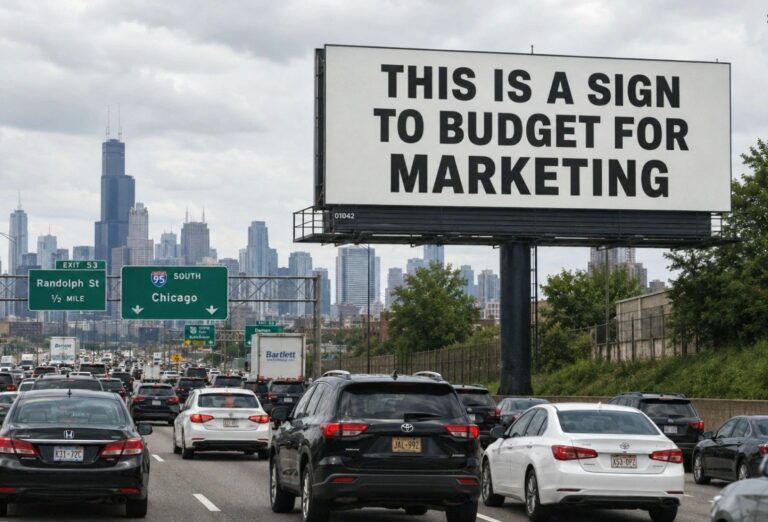
If you work for a Catholic non-profit with a fiscal year that ends June 30, I know you’re scrambling to finalize your budget right now.
How do I know? Because I’ve been you. The end-of-fiscal-year crunch is real — both for using up your current budgeted funds and for setting your priorities, hopes, and dreams for the year ahead. It’s a season of spreadsheets, leadership meetings, and the pressure to justify every line item before the new fiscal year begins.
So this is your reminder: budget appropriately for marketing — and then budget a little more.
One of the smartest things you can do when building your marketing budget is to carve out a small, flexible reserve. Call it a slush fund, a discretionary line, or a contingency — whatever gets it past your CFO. The point is to have uncommitted dollars available for the marketing opportunities you can’t plan for in June.
Because here’s the truth: you don’t know all your brilliant marketing ideas on June 30. Nobody does.
Why a Flexible Marketing Budget Is Different from a Contingency Fund
Most organizations build some form of operational contingency into their annual budgets. But a marketing slush fund serves a different purpose than a general rainy-day reserve.
A contingency fund is defensive — it exists to cover unexpected costs and prevent budget shortfalls. A marketing slush fund is offensive. It exists so that when an unexpected opportunity presents itself, you can move fast without robbing another line item, waiting for board approval, or watching the moment pass.
Catholic organizations in particular operate in a rhythm defined by the liturgical calendar, major feast days, newsworthy moments in the Church, and the natural ebb and flow of donor engagement throughout the year. Not all of those moments are foreseeable in June. A flexible marketing budget gives you the ability to respond when they arrive.
Where to Add Padding to Your Marketing Budget
Here are the six areas where a little extra flexibility in your marketing budget will consistently pay off.
1. Digital Advertising
If you come up with a timely, high-performing lead generation campaign in October, you’ll need extra ad money to promote it — without slowing down your baseline digital activity. Paid social and search campaigns can be spun up quickly, but only if you have the budget to fund them.
This is especially true for donor acquisition. A well-timed giving campaign tied to a feast day, a news moment in the Church, or a matching gift opportunity can generate significant return. But it requires ad spend that wasn’t on your radar in June.
A good rule of thumb: if your current digital ad budget feels tight, it probably is. Build in at least 10–15% above your planned spend as a reserve for opportunistic campaigns.
2. Website Updates
You may not be planning a full website redesign this year, but unexpected needs have a way of appearing. A new program launches and needs a landing page. A major event needs a microsite. A new initiative requires a custom intake form or an integration your current site doesn’t support.
Many of these needs are small in isolation, but they add up. Development work, design hours, and WordPress plugins all come with price tags. A modest reserve in your marketing budget for website updates means you’re not scrambling for approval every time a stakeholder asks for something new.
3. New Tools and Technology
We’re in the middle of a significant shift in how marketing and communications work gets done, and AI is driving a lot of it. New tools emerge constantly — some are useful, and some are not. The only way to know is to experiment.
Subscription fees for marketing technology add up faster than most people expect. If you’re not budgeting for new tools, you’re either falling behind peers who are, or you’re raiding other line items to cover subscriptions you didn’t plan for.
Set aside a small amount in your marketing budget for tool exploration and adoption. Even $1,000–$2,000 in flexibility can make the difference between being able to test something promising and being stuck waiting for next year’s budget cycle.
4. Photography and Videography
This one is non-negotiable — and it comes up every year regardless of what you planned.
No matter how strong your writing is, photos and videos of your mission in action are essential. They drive engagement on social media, build trust with prospective donors, and give your campaigns the visual credibility that stock images (or, even worse, AI-generated images) simply cannot provide.
You may not have a major video production budgeted this year. But there will be moments — a powerful program milestone, a compelling beneficiary story, a staff or volunteer gathering — worth documenting. Even a half-day shoot with a skilled photographer or videographer can yield assets you’ll use for 12–18 months.
Budget for at least one opportunistic shoot. Your future self, writing next year’s annual report, will thank you.
5. Events and Experiential Marketing
Catholic organizations often host or participate in events — galas, conferences, retreats, diocesan gatherings — that carry marketing implications. Booth materials, signage, printed collateral, branded giveaways, and event-specific social content all cost money.
If your event calendar is subject to change (and whose isn’t), having a small reserve in your marketing budget specifically for events and experiential moments gives you room to show up well when the opportunity is right.
6. Outside Help
This is the one that often gets overlooked until it’s too late.
There are moments in a ministry’s year when in-house capacity simply isn’t enough — a capital campaign launches, a leadership transition happens, a new program needs a full go-to-market push. In those moments, having budget available for outside strategy or execution support is the difference between a fire drill and a smooth launch.
At White Tree, we bring almost 20 years of experience inside Catholic organizations to that kind of engagement. We’ve been in the building. We know the culture, the calendar, and the sensitivities — and we can move quickly when you need it.
As we like to say: “We’ll focus on the ad conversions so you can focus on the spiritual ones.”
Leave something in the budget for outside help. Even if you don’t end up using it, the optionality is worth more than the dollars.
How Much Should Your Marketing Budget Slush Fund Be?
There’s no universal answer, but a reasonable starting point is 10–20% of your total planned marketing spend as an unallocated reserve.
For smaller organizations with tight budgets, even a flat $3,000–$5,000 discretionary line can provide meaningful flexibility. For larger ministries with more complex marketing operations, the number should scale accordingly.
The goal is not to hoard money — it’s to avoid being caught flat-footed when the right opportunity presents itself. A healthy marketing budget has both committed spend and flexible reserves.
Making the Case to Leadership
If you’re working to justify a marketing budget slush fund to a CFO, development director, or board, here’s the framing that tends to work:
The cost of inaction is real. Every time a marketing opportunity passes because the budget wasn’t there, you pay a price — in missed donors, lower awareness, or a weaker campaign. That cost rarely shows up on a budget variance report, which makes it easy to ignore. But it compounds.
Flexibility is a form of stewardship. Catholic organizations have an obligation to use resources well. A rigid marketing budget that can’t respond to the moment is a missed stewardship opportunity. Funds that are positioned to move quickly when the right opportunity appears serve the mission more effectively than funds tied up in line items that no longer reflect reality.
You can always reallocate unused reserves. A marketing slush fund doesn’t disappear if you don’t use it. It can be redeployed to other priorities at year-end. The risk of building in flexibility is low. The risk of not building it in can be significant.
The Bottom Line on Your Marketing Budget
The best marketing budget isn’t necessarily the biggest one — it’s the one built with enough flexibility to respond to what you can’t predict in June.
Carve out a slush fund. Protect it from the line-item shuffles that happen throughout the year. And when the moment comes — a campaign idea that’s too good to pass up, a story that needs to be told, a tool that would change how you work — you’ll have the resources to act.
That’s not wasteful spending. That’s smart stewardship of your marketing budget.


